Stacy Surla, Ananya Kaipa & Ming Rui Lee
Getting to Excellent in Teaching UX
Editorial
In the beginning, there were no courses or degrees in information architecture (IA) or user experience (UX) design. With the advent of personal computing in the 1970s and the availability of the world wide web in the 1990s, people simply started borrowing, adapting, or inventing user-centered design methods to make websites and systems that worked for other people. These pioneer practitioners of information architecture and user experience design came to their work already trained and skilled in diverse arenas, including library science, psychology, computer science, graphic design, communications, and marketing. While some early practitioners were grounded in academia, the majority were working practitioners [1].
As the call for UX work persisted, degree programs in user experience-related fields emerged, beginning in the early 2000s. Notably, predating the web and continuing through the web era, academic research into Human-Computer Interaction (HCI) in the US was and continues to be underway at higher education institutions such as Carnegie Mellon, the University of Maryland, and Stanford University. Therefore web-based, practice-based courses and degree programs emerged alongside established academic curricula, and continue to develop and be intertwined with them. Undergraduate, graduate, and postgraduate degrees can now be obtained in HCI, UX, and IA-related fields at institutions worldwide.
For the discipline of IA specifically and UX more broadly, it remains unclear what distinguishes an excellent education, or how such “excellence” could be defined and pursued. This matters for the growth of IA and UX as academic disciplines, for the effectiveness of UX education to people’s careers and to real-world outcomes, and to the quality and relevance of academic UX research.
UX and IA can benefit from a rethinking of their roles and strategies in light of changes in technology, the economy, and other factors, as other information science disciplines have done [2]. An important next step for IA and UX as academic disciplines begins with formally discussing and agreeing upon an academic stance and path forward.
In April 2025, an international group of academics and practitioners gathered in Philadelphia for the 10th Academics and Practitioners Roundtable (Roundtable) on ‘IA and UX in Education: Getting to Excellent,’ to explore what constitutes excellent education in that space as a necessary step for a meaningful understanding of the current UX educational ecosystem, and for helping instructors and administrators identify drivers and indicators in support of improvements. The Roundtable sought to:
- Identify the factors that comprise an excellent UX education from the perspective of both academia and industry;
- Draft a vision for helping academics and practitioners improve UX education and outcomes;
- Create a framework for conducting field research into questions emerging from the discussion.
This editorial summarizes key outputs from that Roundtable, describes subsequent research efforts initiated by the Teaching User Experience working group that was inaugurated at that meeting, and briefly discusses some open questions currently being pursued, including the topic of the 11th IA Roundtable, Polycrisis, Positionality, Hyperlocality, and Information Architecture, held April 14, 2026.
The 10th Roundtable
Reframe IA is an informal, collaborative association of academics and practitioners that supports the development of information architecture as a practice and an academic discipline. After the first Roundtable, organized in Baltimore by Andrea Resmini, this organization’s activities and outcomes have included ten more yearly Roundtable meetings, each focusing on identifying and furthering research and improving practices in targeted areas of importance, as well as the publication of ‘Reframing Information Architecture’ (2014) and ‘Advances in Information Architecture’ (2021).
After exploring teaching (2014), critique (2015), masterworks (2016), boundaries (2017), ethics (2018), diversity and inclusion (2019), value in information architecture (2020) and the value of information architecture (2021), exploring education in information architecture and user experience design seemed a necessary return, after more than a decade, for the 10th Roundtable. This meeting, organized by Stacy Surla, Andrea Resmini, Dan Klyn, and Dan Zollman, was held in conjunction with the Information Architecture Conference in Philadelphia in April 2025. It ran as a full-day working session that blended in-person and remote contributions, with educators and practitioners from the U.S., Canada, Sweden, Italy, and South Africa discussing their experiences and ideas on key themes concerning higher education in IA and UX, industry relevance, and their visions for the future of formal curricula and the development of the disciplines. The Roundtable explored how UX and IA are currently being taught, and began to identify factors that comprise excellence, with the goal of determining ways to improve formats, methods, and outcomes.
Following a format used in past Reframe IA events, the Roundtable interspersed talks and discussion with hands-on design thinking activities to support brainstorming, analysis, and achieving consensus. It specifically sought to:
- Identify factors that comprise an excellent UX education;
- Determine concrete steps to improve curricula and programs;
- Outline a framework and research questions for field research;
- Develop ideas that can be applied in teaching and practice.
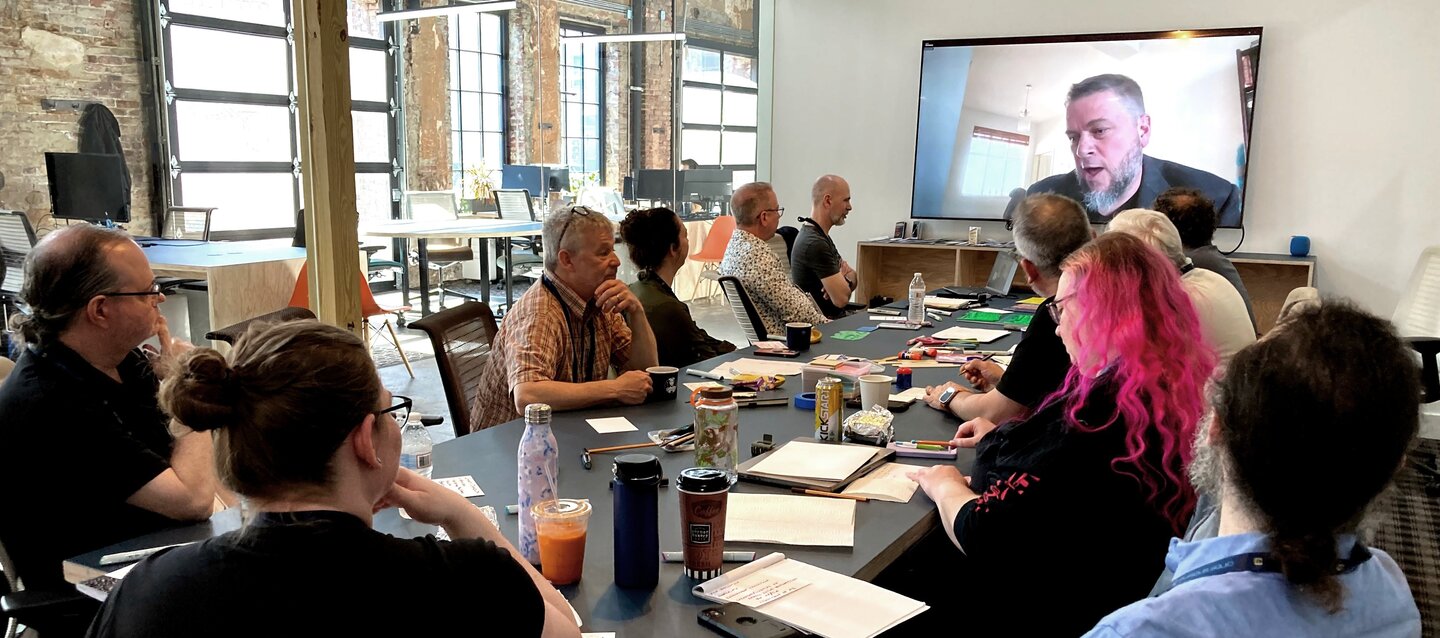
Fig. 1 Attendees at the 10th IA Roundtable (Image: Stacy Surla)
The Roundtable opened with seven participants delivering 10–20 minute lightning talks, followed by a collaborative review of attendee-provided materials. These presentations focused specifically on excellence in IA and UX pedagogy or explored broader educational frameworks.
In “Are We Doing IA?” Tania Schlatter, Wheaton College, discussed identifying and situating IA in undergraduate design education. Terence Fenn and Jason Hobbs, University of Johannesburg, presented “Pedagogic IA/UX: A Southern African Perspective” which touched upon issues of hyperlocality, wicked problems, and framing IA in the context of a design education. Stacy Surla, University of Maryland, provided a framework for developing potential research questions in “Let’s Put On A Field Research Project!” Dan Zollman presented “A social and historical perspective on UX education: From HfG Ulm to present day U.S.” in which he proposed such elements as the importance to UX education of recognizing the legacy of social design and fostering political thought and action. Noreen Whysel, City University of New York, in her talk “IA and the Technical BFA,” discussed the approach to IA and UX pedagogy and the specific needs of an urban and commuting student body. Jimmy Chandler, UX Principles, presented “Ethics of UX/IA Education in a Poor Job Market” and Kat King, Princeton University, spoke about “What We’re Doing vs Job Titles.” Both Chandler’s and King’s talks grappled with appropriateness of design education in the context of jobs and industry [3].
These talks and the ensuing discussions saw participants express a consensus that a philosophical shift is needed at the foundation of IA and UX education, one that moves beyond a tool-centric curriculum to one that builds conceptual thinking and research rigor. Such a repositioned pedagogy should involve recognizing how design could potentially go beyond product development and achieve a locus that can challenge power structures, address societal inequities, and be used for the collective public good.
The participants discussed how information architecture should be taught as a distinct, standalone discipline with its own theoretical foundations, as its core principles are critical for navigating the complexity of modern systems and are applicable across various fields, not just in traditional UX design. A concern was also expressed that any form of education should recognize and accommodate the unique realities faced by learners, including socioeconomic backgrounds, personal and professional obligations, and possible constraints.
Current State Statements
Participants used a Mad Libs format to describe the current state of their pedagogical approaches and the specific types of learners they engage. Participants then created and discussed booklets representing their approaches [4].
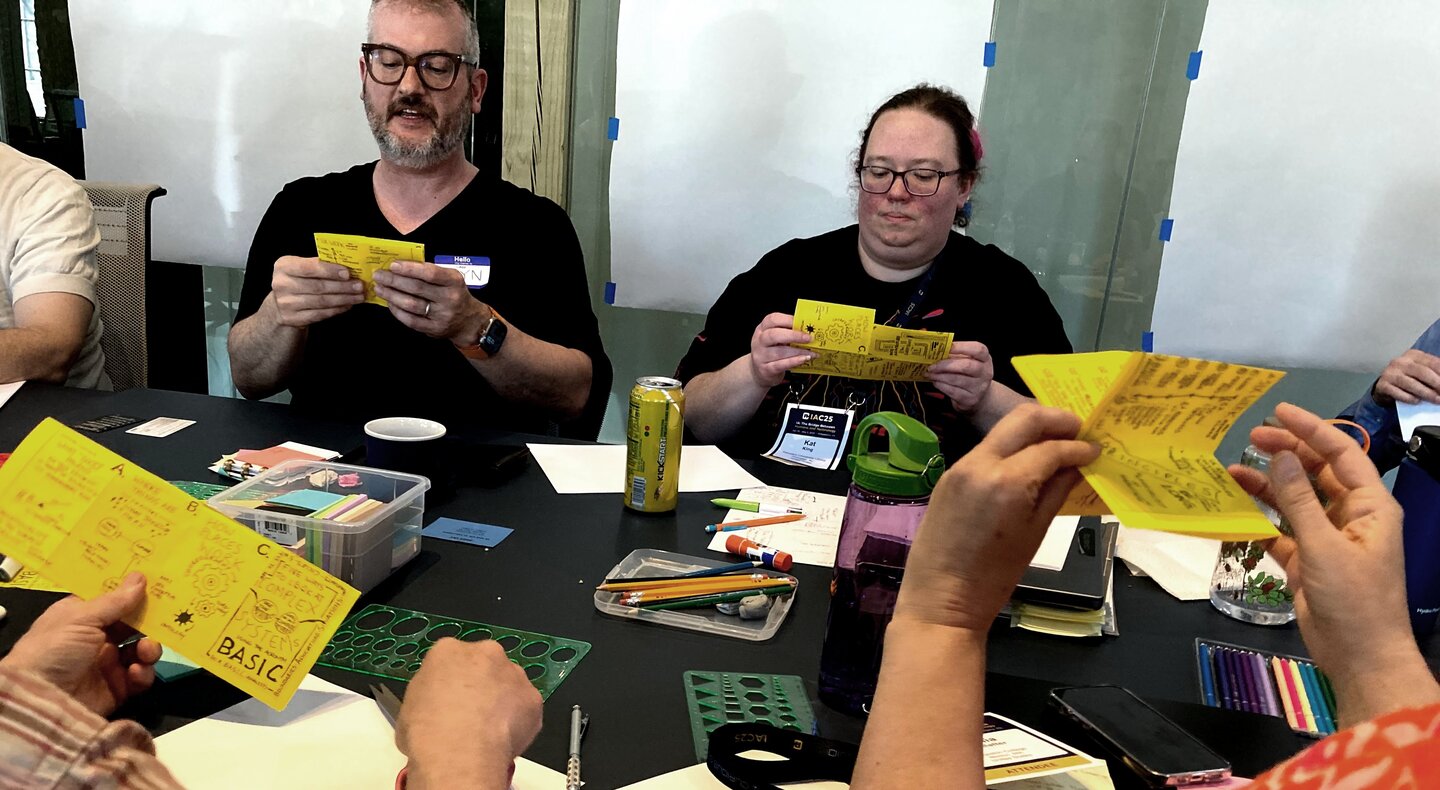
Figure 2 Attendees creating booklets (Image: Stacy Surla)
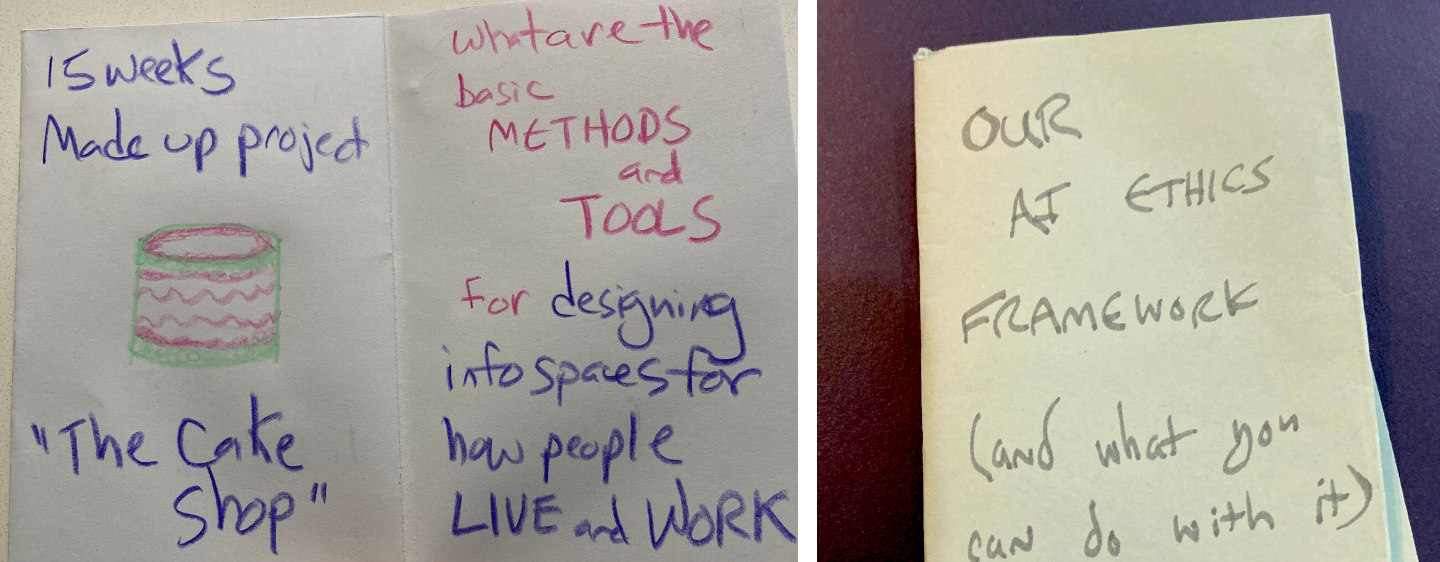
Figure 3 Examples of booklets (Images: Stacy Surla)
Future State Discussion
The final Roundtable activity was a future state brainstorm and discussion, during which participants summarized their conclusions from the day, described the visions they have for the future of information architecture, and made statements about what they saw as the grand challenges ahead for IA and UX education. This culminating activity yielded a wealth of insights and prospective research trajectories. Post-Roundtable analysis and synthesis revealed several key findings with significant local and global implications, identified core themes, and consolidated the participants’ contributions into three primary research themes or concerns.
Rethinking IA and UX Education. Design education in IA and UX must undergo a philosophical shift, moving away from prescriptive, tool-centric training and toward a curriculum that builds conceptual thinking, research rigor, and a critical understanding of design's societal context. Information Architecture should be taught as a distinct, standalone discipline with its own theoretical foundations, as IA’s core principles are critical for navigating the complexity of modern systems and are applicable across various fields, not just within traditional UX design.
Hyperlocality. The global context of education in information architecture, experience design, HCI, and adjacent disciplines requires further exploration, and relationships with teaching institutions across the world should be cultivated. The tension between consolidation and contextualization should be resolved as educational programs maintain coherence with current evolutions in IA and UX while adapting their teaching methods and curricula to the unique realities of their student bodies, including socioeconomic backgrounds, professional and family obligations, and prior educational experiences and fears, in order to create a more supportive and effective learning environment.
Social Impact. Designers have a social responsibility that extends beyond product creation. Education institutions must equip UX practitioners with the critical faculties to challenge power structures, address societal inequities, and use of their skills for the collective good. Design education needs to foster such thinking among students.
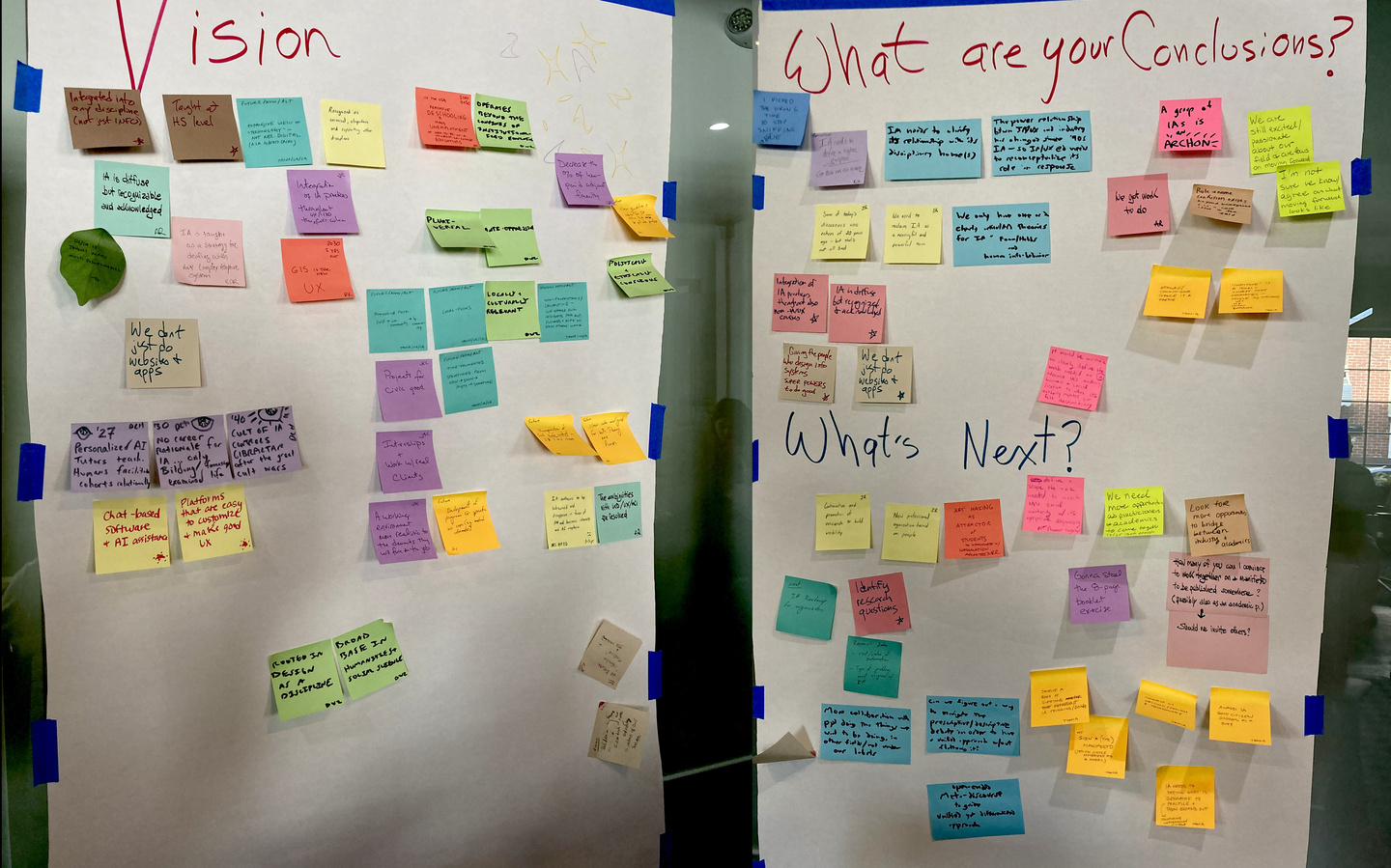
Figure 4 Future State brainstorms (Images: Stacy Surla)
Potential research questions related to these themes include:
Theoretical Understanding of the Field of IA. What does IA mean in different contexts? How does IA fit into various industries? What language is being / can be used to talk about IA so that it is universally understood? How might we evangelize IA effectively? How might IA build relationships with other fields, to mutual benefit?
Educational Systems. How can IA pedagogy be integrated into other academic disciplines, for instance as a strategy applicable to any system? How can we better conduct academic research into UX and IA?
Practical Applications. How might we bridge the gaps between what we teach and what is needed in the industry? How can we be more locally relevant? How might we use UX education as a tool to solve community-based, real world problems?
Continued Research by the TUX Working Group
The Teaching User Experience (TUX) working group was formed post-Roundtable by Stacy Surla to study the landscape of existing UX and IA education systems in order to improve the caliber and effectiveness of UX and IA education to career and real-world outcomes, as well as to improve the quality and relevance of academic UX and IA research. Founding members include University of Maryland HCI postgraduate research associates Sunakshi Jain, Ananya Kaipa, Ming Rui Lee, and Pavlo Mulyk.
TUX’s initial investigation has focused so far on UX and HCI education as the broader ecosystem in which information architecture situates itself, with a plan to later engage information architecture-specific teaching and learning more directly and in greater depth. Drawing on its analysis of the 10th Roundtable preparatory materials, lightning talks, and workshop outputs summarized above, the working group identified a number of recurring themes and open questions that demanded further exploration. These led to an initial, still ongoing, survey of academic institutions in the HCI/UX space and to the development of an exploratory, non-exhaustive examination of current literature in the space.
Global survey of academic institutions teaching HCI/UX
In an effort to understand the current state of IA and UX education initiatives around the world, and the similarities and differences between these and HCI education with which they often overlap, the working group conducted an initial survey of existing graduate programs in universities and institutes across the world. Web searches for schools with degree programs in Human Computer Interaction or User Experience Design were conducted for the following regions: The Americas (excluding the United States), APJC (Asia Pacific Japan and China), Africa, Australia, Europe, India, and the United States. In this preliminary search, the HCI or UX degree programs of 68 universities were reviewed (Americas 10, APJC 11, Africa 2, Australia 5, Europe 15, India 5, and the United States 20).
Search results were assessed for coherence with the context and purpose of the survey. Multiple countries had masters programs in other majors which included courses in HCI as electives; these programs were not included in the list. Some limitations to the initial survey were that many results required translation and interpretation, and terminologies used to describe programs varied, so programs may have been missed. The search results for India were concerning as they included programs the working group weren’t aware of, which suggests those results were incomplete and may not be representative of the top programs. Overall, these initial findings require further clarification from design experts from other countries, especially for Europe and APJC.
The data points captured included details about the degree program, including cohort size, curriculum details (if described on the official website), duration of the program, location, and the scope of the education (whether it was hyperlocal or had some global focus).
From this initial survey, the team gathered that UX and HCI education is more prevalent in North America, Australia, and India. Dedicated HCI and UX programs are rare in Japan, China, and most of Central and South East Asia, although electives or isolated classes on related topics exist. The same is true for most countries in Africa (with the exception of South Africa and Zambia), where secondary education in UX design doesn’t appear to exist.
This implies that while user experience, HCI, and related UX topics are extremely relevant in today’s world, global education for these subjects is still playing catch-up.
There is a need for a deeper, comprehensive inventory of academic institutions that offer undergraduate and graduate programs in UX or HCI. It would also be important to identify any degree programs that exist globally in information architecture specifically. In UX and HCI-offering institutions where IA is not a degree option, it would be revealing to understand which departments offer information architecture courses, and the light in which IA is presented in those courses and departments. Furthermore, the importance for considering hyperlocality in IA/UX education would suggest that certification programs, bootcamps, and other locally/positionally relevant teaching organizations should also be included in a broader survey.
Literature Review
A non-exhaustive, initial review of existing literature specifically discussing IA, UX, and HCI education is ongoing and informs both current initiatives such as the Roundtable and TUX’s understanding of the present context. It reflects the published work available in peer-reviewed conference papers and journal articles drawn from the ACM Digital Library, including proceedings from SIGCHI, DIS, and SIGDOC, selected for their relevance to IA, UX, and HCI education, pedagogy, and professional practice. It also considers only works published in English, and skews toward North American and Western European academic contexts, which means, for example, that emerging or practitioner-led perspectives may be underrepresented.
Still, even this initial review suggests a few possible lines of inquiry:
- The need to develop the discipline of information architecture by defining essential competencies such as curiosity, adaptability, empathy, and strong communication skills, all of which extend beyond technical knowledge (Winter & Stevens, 2024);
- The necessity to shift pedagogy away from isolated, single-user problems toward transdisciplinary challenges in a much larger context (Sung & Han, 2025);
- The integration of ethical practice into curricula (Chivukula et al., 2020). For true relevance, programs must be redesigned to make accessibility, inclusivity, and responsibility explicit core values from the start, moving away from simple compliance.
- A persistent thread running through some of the papers criticises university programs as overly theoretical (MacDonald et al., 2022). The sources call for curriculum alignment with industry needs through hands-on learning, working with real-world clients, and reframing problems in order to shift student outcomes away from purely theoretical frameworks to include career-readiness.
Next steps for the literature review include gathering a much wider range, chronologically and geographically, of textbooks used by instructors, and addressing the questions and themes that emerged from the 10th Roundtable, concentrating specifically, at least initially, on the information architecture aspects of the problems discussed.
One Year On
The 11th IA Roundtable on Polycrisis, Positionality, and Hyperlocality was held on April 14, 2026. It built on Andrea Resmini’s 2025 World IA Day keynote (Resmini 2025) and asked its twenty participants from industry and academia to imagine how information architecture can evolve to meet the needs of an increasingly complex world. It leveraged several important insights articulated at the 10th Roundtable, including the attention to issues of hyperlocality as a way to correctly approach and address local contexts, cultures, challenges, imperatives, and aspirations in the design and practice of teaching information architecture and user experience design around the world.
Special Issue and Future Work
The TUX working group took on the task of supporting the development of this issue of the Journal on information architecture education. This work included inviting individuals who participated in the 10th IA Roundtable to contribute to producing this issue by writing a paper or by being interviewed to further discuss their experiences and views on the topic of information architecture education, broadly intended. The contributions span theory, methods, processes, and approaches, but all speak directly to the exploration of excellence in IA and UX across higher education and industry.
The working group plans to expand involvement of information architecture practitioners and academics in its activities, and continue meeting through 2027. Its present end goal is to attain an agreed-upon position from which we can draft a “grand challenge” for information architecture. The working group would then convene a conclave among the broader teaching and practicing community in order to come to consensus and publish a report on the present-day challenges and visions for the discipline of information architecture.
Acknowledgments
The authors want to express their deep appreciation to Sunakshi Jain and Pavlo Soldatov Mulyk (University of Maryland) for their creativity and scholarly contributions as part of the Teaching User Experience working group.
References
- Bertot, J. C., Sarin, L. C. & Percell, J. (2015) (rep.) Re-Envisioning the MLS: Findings, Issues, and Considerations (pp. 1–57). College Park, MD: University of Maryland.
- Chivukula, S. S., Watkins, C. R., Manocha, R., Chen, J. & Gray, C. M. (2020). Dimensions of UX practice that shape ethical awareness. In Proceedings of the 2020 CHI Conference on Human Factors in Computing Systems (pp. 1–13). Association for Computing Machinery. https://doi.org/10.1145/3313831.3376459
- MacDonald, C. M., Rose, E. J. & Putnam, C. (2022) An industry in flux: Where does UX go from here? Interactions, 29(2), 55–58. https://doi.org/10.1145/3511671.
- Hewett, T. T., Baecker, R., Card, S., Carey, T., Gasen, J., Mantei, M., Perlman, G., Strong, G., & Verplank, W. (1992). ACM SIGCHI curricula for human-computer interaction. Association for Computing Machinery
- Resmini, A. (2025) Information Architecture. In Baker, D. and Ellis, L. (eds) Encyclopedia of Libraries, Librarianship, and Information Science (1st ed). Academic Press, 212–229. doi:10.1016/B978-0-323-95689-5.00198-X.
- Resmini, A. (2014) Reframing Information Architecture. Springer.
- Resmini, A., Rice, S. A. & Irizarry, B. (2021) Advances in Information Architecture: The Academics / Practitioners Roundtable 2014–2019.
- Resmini, A. (2025) Everything Flows: Adapting Information Architecture in an Evolving World. https://andrearesmini.com/blog/everything-flows/. Video: https://www.youtube.com/watch?v=6QwUUgyIgUI.
- Sung, S. & Han, A. (2025) From HCI classroom to complex challenges: Enhancing HCI education through cross-disciplinary teamwork and stakeholder engagement. In Extended Abstracts of the CHI Conference on Human Factors in Computing Systems (CHI EA '25). Association for Computing Machinery. https://doi.org/10.1145/3706599.3706697.
- Wodtke, C. (2021) Toward a New Information Architecture: The Rise and Fall and Rise of a Necessary Discipline. In Resmini, A., Rice, S. A. & Irizarry, B. (eds) Advances in Information Architecture, 63–74.
- Winter, D. & Stevens, G. (2024) What makes for a good UX professional? Development of a UX professional competence model. In Proceedings of Mensch und Computer 2024 (MuC '24) (pp. 184–195). Association for Computing Machinery. https://doi.org/10.1145/3670653.3670656.
Footnotes
[1] For more on the history of IA and UX, see Wodtke, C. (2021) Toward a New Information Architecture: The Rise and Fall and Rise of a Necessary Discipline. In Resmini et al. (eds), 63–74. See also Resmini, A. (2025) Information Architecture. In Baker, D. and Ellis, L. (eds) Encyclopedia of Libraries, Librarianship, and Information Science (1st ed). Academic Press, 212–229. doi:10.1016/B978-0-323-95689-5.00198-X.
[2] See, for instance, ACM SIGCHI’s Curricula for Human-Computer Interaction (Hewett 1992), and the University of Maryland’s Re-Envisioning the MLS initiative (Bertot 2015).
[3] Several of these Lightning Talk topics were expanded or elaborated upon in papers that will be included in this issue and in the JoIA Spring issue. See Schlatter’s “Making Lists, Mind Maps, Scenarios, and Flows: Identifying Characteristics of Information Architecture in Undergraduate Work,” Hobbs’ “Pedagogy of a Second Intellectual Culture Information Architecture: Foundations, Scope and Implications,” and Whysel’s “Information Architecture and the Technical BFA: Mapping a Path for Access Education in IA.”
[3] See Mad Libs at www.madlibs.com.